The loan documents are ready and the bank has approved the facility. Then, a day before signing, one more document arrives. It is a personal guarantee, and the bank wants the president director to sign it.
Foreign executives running Indonesian companies get this request often. A personal guarantee in Indonesia (known locally as borgtocht or penanggungan) makes the guarantor personally liable for the company’s debt. If the company does not pay, the bank can claim against the guarantor’s own assets.
The Civil Code gives guarantors some protections, but the bank’s standard form usually asks the guarantor to give them up. The form is often in Bahasa Indonesia and tends to arrive close to signing. This leaves little time for independent advice or a careful read of the terms.
Recent Supreme Court guidance narrows a guarantor’s exposure in two ways:
- it limits the scope of the guarantor’s liability, and
- it protects guarantor-owned assets in the debtor company’s bankruptcy.
The Court issued this guidance in Circular Letter No. 2 of 2024 on 17 December 2024. It then applied it in Decision No. 45 PK/Pdt.Sus-Pailit/2024, dated 16 May 2025.
These rules matter to both guarantors and creditors. Directors need to understand the personal exposure they are taking on, while lenders, suppliers and joint venture partners need to know what protection a guarantee from an Indonesian counterparty provides.
Key Takeaways
- A personal guarantee in Indonesia is governed by Articles 1820 to 1850 of the Civil Code. It is a separate contract that depends on a valid main debt.
- The Civil Code lets a guarantor insist that the creditor pursue the debtor first. However, most bank forms ask the guarantor to waive this right, and the creditor can then claim from the guarantor directly.
- A personal guarantee is not a security right over specific assets. As a result, the creditor must win in court or arbitration, or obtain a bankruptcy order, to reach the guarantor’s assets.
- Once a guarantor waives the statutory privileges, a creditor can petition the Commercial Court to declare the guarantor bankrupt. The company does not need to be bankrupt first.
- Supreme Court Circular Letter No. 2 of 2024 limits a guarantor’s liability to the debt owed to the guaranteed creditor. It also keeps guarantor assets out of the company’s bankruptcy estate, unless proven otherwise.
- A person declared bankrupt cannot be appointed as a director for five years afterwards (Company Law, Article 93).
- Indonesian courts do not enforce foreign court judgments. Foreign arbitral awards, by contrast, can be enforced under the New York Convention, so the forum clause matters a great deal.
What Is a Personal Guarantee in Indonesia?
The Legal Definition
A personal guarantee in Indonesia is a contract in which a third party promises a creditor to perform the debtor’s obligation if the debtor fails to do so. Article 1820 of the Civil Code sets out this definition. The third party is the guarantor (penanggung), and the contract is the guarantee (borgtocht).
In practice, the guarantor is usually close to the borrower. For example, the guarantor may be the founder, a director, a major shareholder or a foreign sponsor. A company can also give a guarantee. That is a corporate guarantee, and the same Civil Code rules apply to it.
Four Rules Every Guarantor Should Know
The Civil Code sets several ground rules. Four of them matter most at the point of signing.
- The guarantee depends on the main debt: Under Article 1821, a guarantee needs a valid main obligation. So if the loan itself is void, the guarantee generally falls with it. Article 1821 nevertheless permits a guarantee of an obligation voidable on a defence personal to the debtor, such as minority.
- It cannot be larger or harsher than the debt: Article 1822 states that a guarantor cannot owe more than the debtor, or owe on heavier terms. A guarantee that goes further is not void. It is valid only to the extent of the main obligation. A guarantee may, however, cover only part of the debt.
- It must be express: Article 1824 states that a guarantee is never presumed. It must be stated clearly, and it cannot be stretched beyond the limits set when it was given.
- It passes to the heirs: Under Article 1826, the guarantor’s obligations pass to his or her heirs. The creditor can therefore claim against the estate after the guarantor’s death.
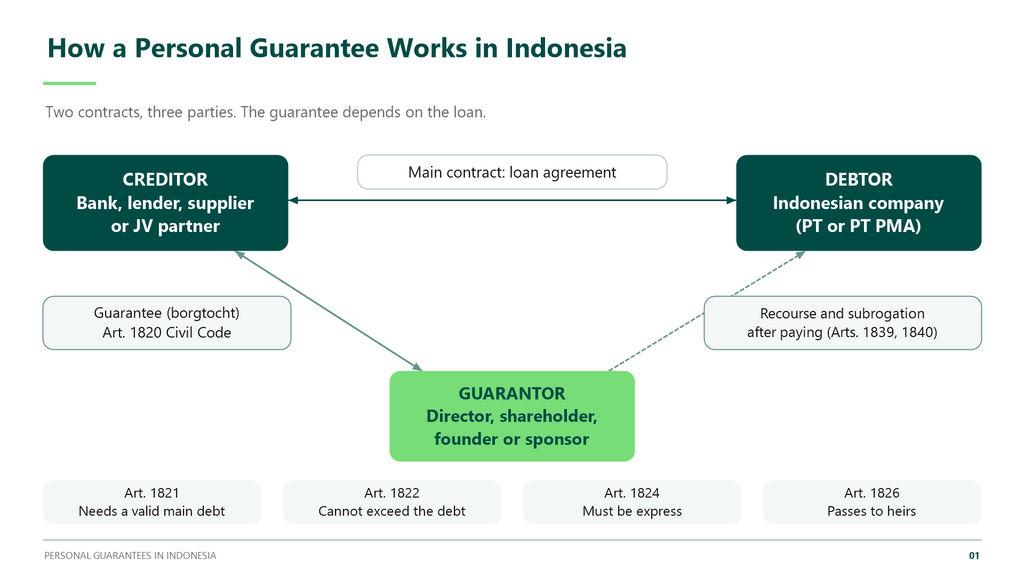
Figure 1. How a personal guarantee in Indonesia works: two contracts, three parties.
Who Signs and Why Lenders Ask
Indonesian banks rely heavily on collateral. However, collateral takes time to enforce, and asset values fall when a business fails. A personal guarantee gives the lender a second source of recovery. It also gives the owners a direct financial stake in repayment.
According to the Financial Services Authority (OJK), bank credit reached Rp9,178 trillion in August 2026, up 13.65% year on year. Corporate credit grew faster, at 22.18%, while investment credit rose 25.11%. At the same time, the gross non-performing loan ratio rose to 2.11%, from 2.05% in December 2025. When loan books grow and bad loans rise, lenders ask for more guarantees.
Foreign capital adds to the volume. The Ministry of Investment and Downstreaming (BKPM) recorded Rp1,931.2 trillion of realised investment in 2025, or 101.3% of the government’s target. Foreign direct investment accounted for Rp900.9 trillion, or 46.6% of the total. Singapore was the largest source, at US$17.4 billion.
Many of these projects use local bank debt. In turn, many of those loans come with a guarantee from a director, a sponsor or an Indonesian joint venture partner. Investors who buy into an existing local company, for instance through a PMDN to PMA conversion, should also check for guarantees the old owners gave. Those guarantees do not disappear when the shares change hands.
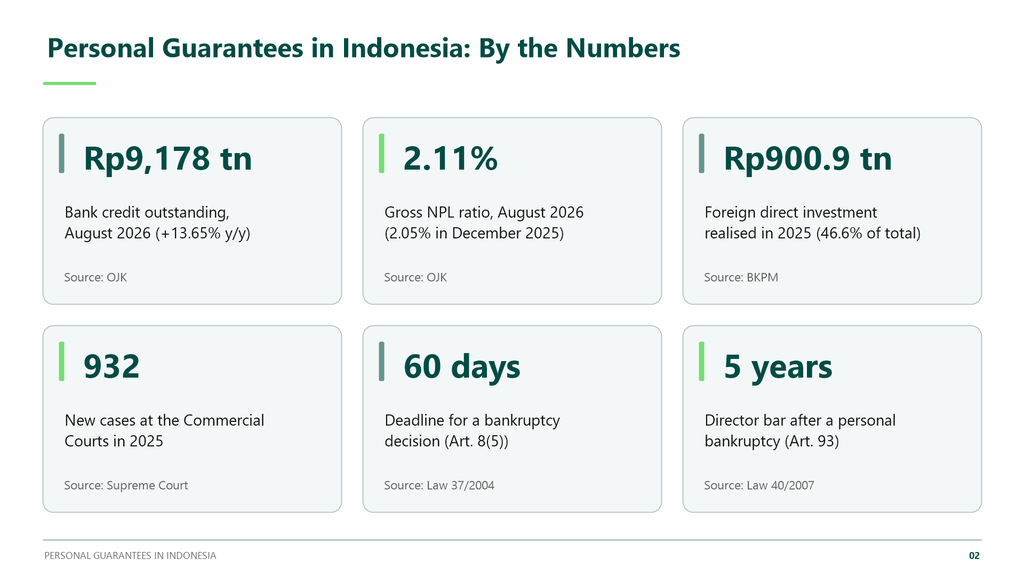
Figure 2. Personal guarantees in Indonesia: the numbers behind the risk.
Guarantor Rights Under Indonesian Law and Why Lenders Ask for a Waiver
The Civil Code gives anyone who signs a personal guarantee in Indonesia more protection than many foreign executives expect. Standard bank forms, however, commonly require guarantors to waive several of these protections. A guarantor should understand what each right does before giving it up.
The Right to Make the Creditor Pursue the Debtor First
Article 1831 states that a guarantor does not have to pay until the debtor’s own assets have been seized and sold. This is the privilege of excussion (beneficium excussionis). In plain terms, the creditor must go after the company first.
The right comes with conditions. Under Article 1833, the guarantor must invoke excussion when first sued. Under Article 1834, the guarantor must identify qualifying debtor assets and advance the costs of seizure and sale. The guarantor cannot point to assets that are under dispute in court, already mortgaged for the same debt, no longer held by the debtor, or located outside Indonesia.
Article 1832 then lists when the right is lost. The most important case is an express waiver in the guarantee. The guarantor also loses the right by agreeing to be jointly liable with the debtor (tanggung renteng), or once the debtor is declared bankrupt. As a result, under a standard bank guarantee, the creditor can claim from the guarantor as soon as the company defaults, without first pursuing the company’s assets..
The Right to Split Liability Among Co-guarantors
Lenders often take guarantees from two or three people. Under Article 1836, each guarantor is liable for the whole debt. However, Article 1837 lets each guarantor ask the creditor to divide its claim, so that each pays only a share. This is the privilege of division (beneficium divisionis). Banks routinely ask guarantors to waive this right as well.
The Right to Recover from the Debtor
A guarantor who pays may seek recovery from the debtor through recourse and subrogation.
- Article 1839 gives a right of recourse for the amount paid, plus interest and costs. The guarantor can recover costs only after telling the debtor about the creditor’s claim within a reasonable time.”
- Article 1840 lets the guarantor step into the creditor’s position (subrogation). In effect, the guarantor takes over the creditor’s claim, including any security the creditor held.
Article 1843 goes further. In some cases, a guarantor can act against the debtor even before paying. For example, this applies when the creditor sues the guarantor, when the debtor is declared bankrupt, or when the debt has fallen due.
Defences and Discharge
A guarantor can also raise the debtor’s own defences against the creditor, except those that are purely personal to the debtor (Article 1847). For instance, if the debt has already been paid or set off, the guarantor can rely on that.
The law releases the guarantor in two specific cases. First, Article 1848 releases the guarantor if the creditor’s own act makes subrogation impossible. A typical example is a creditor that releases collateral without the guarantor’s consent. Second, under Article 1849, the guarantor is free if the creditor voluntarily accepts an asset in payment of the debt.
By contrast, a simple extension of time does not release the guarantor (Article 1850). Even so, it lets the guarantor require the debtor to pay, or to secure the guarantor’s release.
Table 1. Guarantor Privileges Under the Civil Code
| Privilege | Article | What it does | Usual Lender Position | What it Means for the Guarantor |
|---|---|---|---|---|
| Pursue the debtor first (excussion) | 1831 to 1834 | Creditor must seize and sell the debtor’s assets before claiming from the guarantor | Express waiver | Guarantor can be sued as soon as the company defaults |
| Division among co-guarantors | 1836 to 1837 | Each guarantor can ask the creditor to split the claim | Waived; joint and several liability | Guarantor may pay 100% and then have to recover from co-guarantors |
| Recourse | 1839 | Recover the amount paid, plus interest, from the debtor; costs only after timely notice to the debtor | Postponed until the lender is paid in full | Recovery may be worth little if the company is insolvent |
| Subrogation | 1840 | Step into the creditor’s claim and security | Postponed until the lender is paid in full | Guarantor should seek subrogation as soon as the guaranteed debt is cleared |
| Early action against the debtor | 1843 | Claim against the debtor before paying, in set cases | Often waived | Guarantor should keep it where possible |
| Debtor’s defences | 1847 | Rely on the debtor’s defences, such as payment or set-off | Often waived | Guarantor should check for “no defence” wording |
| Release by the creditor’s act | 1848 | Released if the creditor makes subrogation impossible | Often waived | Guarantor should keep it; it gives protection if the lender releases collateral |
Formal Requirements for a Valid Personal Guarantee
A personal guarantee in Indonesia has relatively few formal requirements. However, signing formalities, spousal consent and language rules deserve careful attention.
General Contract Validity
A guarantee is a contract, so it must meet the four conditions in Article 1320 of the Civil Code. These are consent, legal capacity, a defined subject matter and a lawful cause. The Civil Code does not require any special form. A guarantee in a signed private document is therefore valid.
Notarial Deed or Private Deed
Most Indonesian banks still ask for a notarial deed, for two reasons.
- A notarial deed is an authentic deed, so it carries strong weight as evidence.
- The notary checks each party’s identity and authority at signing.
The signing of the guarantee usually takes place before an Indonesian notary. A foreign guarantor who signs abroad faces an additional authentication requirement. The bank will normally require an apostille or consular legalisation of the signature.
Spousal Consent and Joint Marital Property
Banks almost always ask the guarantor’s spouse to sign a consent. This practice comes from Indonesian marital property rules. Under Article 35 of the Marriage Law (Law No. 1 of 1974), property acquired during the marriage is joint property. Under Article 36, a spouse may deal with joint property only with the consent of the other.
A personal guarantee does not transfer any property. However, under Article 36(1) of the Marriage Law, a spouse may deal with joint property only with the other spouse’s consent. Whether consent is legally needed, and which assets the creditor can reach, therefore depends on the couple’s marital-property regime, the terms of the guarantee and any related security. Lenders obtain consent wherever joint property may be affected.
Couples can change this position. A marriage agreement can keep property separate. After Constitutional Court Decision No. 69/PUU-XIII/2015, couples may also make that agreement during the marriage, not only before it.
Foreign guarantors face a different question. Their marital property regime usually follows their own national law. Lenders will therefore ask what that law requires, and many will still ask for a spouse’s signature to be safe.
Language Requirements
Law No. 24 of 2009 requires Indonesian to be used in agreements that involve an Indonesian party (Article 31). Where a foreign party is involved, the agreement is also written in that party’s national language and/or English (Article 31(2)). Presidential Regulation No. 63 of 2019 confirms this in Article 26. It adds that the foreign-language text serves as an equivalent or translation of the Indonesian text, and that the language agreed by the parties applies if the two versions are read differently. Presidential Regulation No. 63 of 2019 confirms this in Article 26.
In Decision No. 601 K/Pdt/2015, the Supreme Court upheld a ruling that voided a loan agreement made only in English between an Indonesian company and a foreign lender. The safe course is a bilingual document, signed in both versions, with a clause stating which version prevails.
How Creditors Enforce a Personal Guarantee in Indonesia
Foreign lenders often assume a personal guarantee in Indonesia works like a mortgage. It does not. A mortgage lets the lender sell a specific asset. A guarantee gives only a right to claim payment from the guarantor.
A Personal Guarantee is not a Security Right
Security rights such as a mortgage over land (hak tanggungan) or a fiduciary transfer (fidusia) attach to specific assets. Both can be enforced through statutory procedures, mainly public auction. Fiduciary enforcement became narrower after Constitutional Court Decision No. 18/PUU-XVII/2019 (6 January 2020). Where the parties have not agreed what counts as default, or the debtor will not hand over the asset voluntarily, the creditor must enforce through the courts.
A personal guarantee gives no such right. It is a promise to pay, backed by the guarantor’s general assets under Article 1131 of the Civil Code. Against the guarantor, the creditor is an unsecured creditor unless the guarantor also grants security. To reach the guarantor’s assets, the creditor must therefore go through a court or an arbitral tribunal.
Route 1: a Claim in the District Court
The standard route is a breach of contract claim (gugatan wanprestasi) in the District Court. Alongside the claim, the creditor can ask the court for a conservatory attachment (sita jaminan) to freeze assets while the case runs.
A civil claim can take considerable time, particularly if the judgment is appealed. The losing side can appeal to the High Court, then to the Supreme Court on cassation, and sometimes seek a further review. In general, the creditor can execute against the guarantor’s assets only once the judgment is final.
Route 2: a Bankruptcy Petition in the Commercial Court
Many creditors prefer a bankruptcy petition because it is faster. It also carries the threat of personal bankruptcy, which often pushes the guarantor to settle. Under Article 2(1) of the Bankruptcy Law (Law No. 37 of 2004), the test has two parts. The debtor must have at least two creditors, and it must have failed to pay at least one debt that is due. Article 8(4) requires only simple proof of these facts. Article 8(5) then requires the court to rule within 60 days of registration.
Courts have treated a guarantor who waived Article 1831 as a debtor for this purpose. As a result, a creditor can petition for the guarantor’s bankruptcy directly. The only ordinary remedy is cassation to the Supreme Court, filed within eight days after the decision is pronounced (Article 11). A final bankruptcy decision can then be challenged by case review (peninjauan kembali), but only on two grounds: decisive new evidence, filed within 180 days, or a clear error by the judge, filed within 30 days (Articles 14, 295 and 296).
Route 3: Arbitration
If the guarantee contains an arbitration clause, the District Court cannot hear a contract claim that falls within it (Articles 3 and 11 of Law No. 30 of 1999). The clause does not block a bankruptcy petition, however. Under Article 303 of the Bankruptcy Law, the Commercial Court keeps jurisdiction as long as the test in Article 2(1) is met.
Arbitration can suit a foreign lender, because an award can be enforced in most countries under the New York Convention. It is not automatically the best forum. The choice depends on where the guarantor’s assets are, the cost, the need for interim relief and the dispute clause in the loan agreement.
To enforce in Indonesia, a domestic award must be registered with the District Court within 30 days. It is then enforced by order of the Chief Judge of that court. An international award needs an exequatur from the Chief Judge of the Central Jakarta District Court (Articles 59, 61, 65 and 66 of Law No. 30 of 1999).
Table 2. Three Routes to Enforce a Personal Guarantee
| Route | Forum | Legal Test | Typical Timeline | Assets Reached | Main Risk |
|---|---|---|---|---|---|
| Civil claim (wanprestasi) | District Court | Guarantee, default and amount owed | Can run for years if appealed to the Supreme Court | Attached assets, then all assets after final judgment | Delay; assets moved before attachment |
| Bankruptcy petition | Commercial Court | Two or more creditors; one debt due and unpaid; simple proof (Arts. 2(1), 8(4)) | Decision within 60 days; cassation within 8 days | All of the guarantor’s assets, through a curator | Petition may fail where the statutory elements cannot be established by simple proof; a dispute over the amount alone does not necessarily prevent bankruptcy. Recovery is shared according to creditor ranking. |
| Arbitration | Agreed institution, such as BANI or an offshore centre | Contract claim under the governing law | Months to a year or more, plus exequatur | Assets in any New York Convention country | Public order objections; cost |
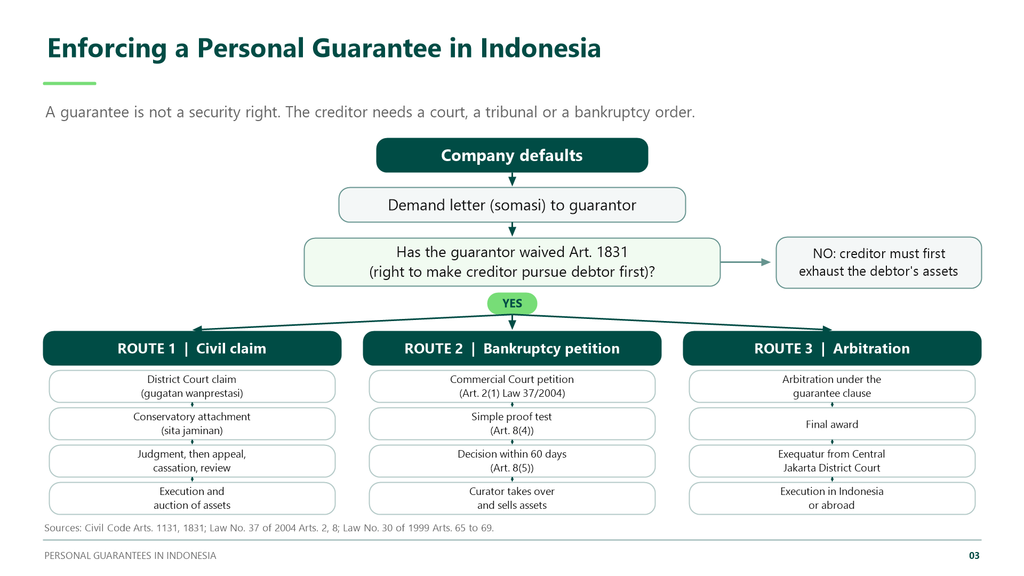
Figure 3. The three routes to enforce a personal guarantee in Indonesia.
Personal Guarantors in Bankruptcy and PKPU
Recent Supreme Court guidance has focused on guarantor liability and guarantor-owned assets in bankruptcy. This is important because most guarantees are invoked when the company can no longer pay its debts. That usually leads to a bankruptcy or PKPU case in the Commercial Court.. The Supreme Court’s 2025 Annual Report shows 932 new cases registered at the Commercial Courts in 2025, on top of 275 cases carried over from 2024. Bankruptcy and PKPU petitions are among the main matters these courts hear.
Can a Guarantor be Declared Bankrupt?
Yes. The Bankruptcy Law defines a debtor as anyone who owes a debt under a contract or statute that can be claimed in court (Article 1(3)). Once a guarantor waives the privilege of excussion, the guarantee debt becomes directly claimable. The guarantor then fits that definition.
Indonesian courts have applied this for many years. For example, in Decision No. 13/Pailit/2010/PN.Niaga.Jkt.Pst, the Central Jakarta Commercial Court declared bankrupt Danny Lukita, the personal guarantor of PT Fit-U Garment Industry, on a petition by Citibank N.A. Likewise, in Decision No. 808 K/Pdt.Sus-Pailit/2017, the Supreme Court dealt with a guarantor declared bankrupt without the main debtor first being declared bankrupt.
An express waiver of excussion may permit direct recourse against the guarantor once the guaranteed debt is due and the guarantee’s enforcement conditions are satisfied. The guarantee remains accessory to the principal obligation; the waiver does not itself create an autonomous debt or remove the limits of the guaranteed obligation.
Why the Company’s PKPU does not Protect the Guarantor
Many directors who signed a personal guarantee in Indonesia assume that if the company files for a suspension of debt payments (PKPU), the moratorium protects them too. It does not. Article 254 of the Bankruptcy Law states that a PKPU does not operate for the benefit of co-debtors and guarantors.
In practice, this means a creditor can still pursue the guarantor while the company restructures. The company’s PKPU can last up to 270 days in total (Article 228(6)). During that time, a creditor remains free to sue the guarantor, or to petition for the guarantor’s bankruptcy. Our corporate restructuring series explains the PKPU process itself in more detail.
Can a Guarantor be Named in a PKPU Petition?
This is a separate question, and the courts have not settled it. Some creditors name the guarantor as a respondent in the company’s PKPU. Others file a separate PKPU petition against the guarantor.
The Central Jakarta Commercial Court has reached opposite results. In Decision No. 212/Pdt.Sus-PKPU/2019, it refused to treat a guarantor as a PKPU respondent. In Decision No. 141/Pdt.Sus-PKPU/2020, however, it allowed it. Judges who refuse such petitions often rely on Article 254 and on the purpose of PKPU, which is to restructure the main debtor’s business.
For a guarantor, the practical message is clear. A guarantor should not assume that a PKPU petition will fail. Instead, the guarantor should start preparing a defence as soon as the company shows signs of distress.
What SEMA 2/2024 Changed
On 17 December 2024, the Supreme Court issued Circular Letter No. 2 of 2024 (SEMA 2/2024). It adopts the results of the Court’s 2024 chamber plenary meetings as guidance for all courts. The Civil Chamber set out two rules on personal guarantees in bankruptcy and PKPU cases.
- Liability follows the guaranteed creditor: A guarantor who guarantees a specific creditor is liable only for the debtor’s debt to that creditor. The guarantor does not answer for the debtor’s debts to other creditors.
- Guarantor assets stay outside the estate: Assets owned by a guarantor or other third party cannot form part of the debtor’s bankruptcy estate, unless proven otherwise.
Both rules help guarantors. Under the first, only the creditor that holds the guarantee can claim on it. The company’s other creditors cannot. Under the second, a curator can no longer, as a rule, treat the guarantor’s own assets as part of the bankrupt company’s estate. Some curators had done so in earlier cases.
A SEMA is internal guidance from the Supreme Court to the lower courts. It is not a statute, so it does not bind in the way a law does. However, it carries real weight in practice, because the Supreme Court hears appeals from those same courts.
How the Supreme Court Applied it
Five months after issuing it, the Supreme Court applied SEMA 2/2024 in a case review (peninjauan kembali). A case review is the last stage of appeal in Indonesia. The lower courts had treated land owned by the guarantors as part of a bankrupt company’s assets. In Decision No. 45 PK/Pdt.Sus-Pailit/2024, dated 16 May 2025, the Court reversed those rulings.
The Court also explained when the “unless proven otherwise” exception applies. A guarantor’s asset becomes part of the company’s estate only if its ownership had at some point passed from the guarantor to the company. If the guarantor has always owned the asset, it stays outside the company’s bankruptcy.
This does not mean the guarantor is safe. The creditor can still sue the guarantor or petition for the guarantor’s own bankruptcy. What has changed is the route. The creditor must now go after the guarantor directly, and can no longer claim the guarantor’s assets through the company’s bankruptcy case. If a company is closed through liquidation rather than bankruptcy, our guide to company liquidation in Indonesia explains that process.
What this Means for Creditors
For lenders, SEMA 2/2024 changes the planning. A creditor that relies on a personal guarantee in Indonesia can no longer expect a curator to collect guarantor assets through the company’s bankruptcy. Instead, it needs its own plan for the guarantor.
In practice, that plan has three parts.
- The creditor should take security directly from the guarantor where the guarantor owns valuable assets, such as a mortgage over land.
- The guarantee should be enforceable on its own terms, with clear waivers and a clear forum.
- The creditor should act early. A creditor that waits for the company’s case to end may find that other creditors have already moved against the guarantor.
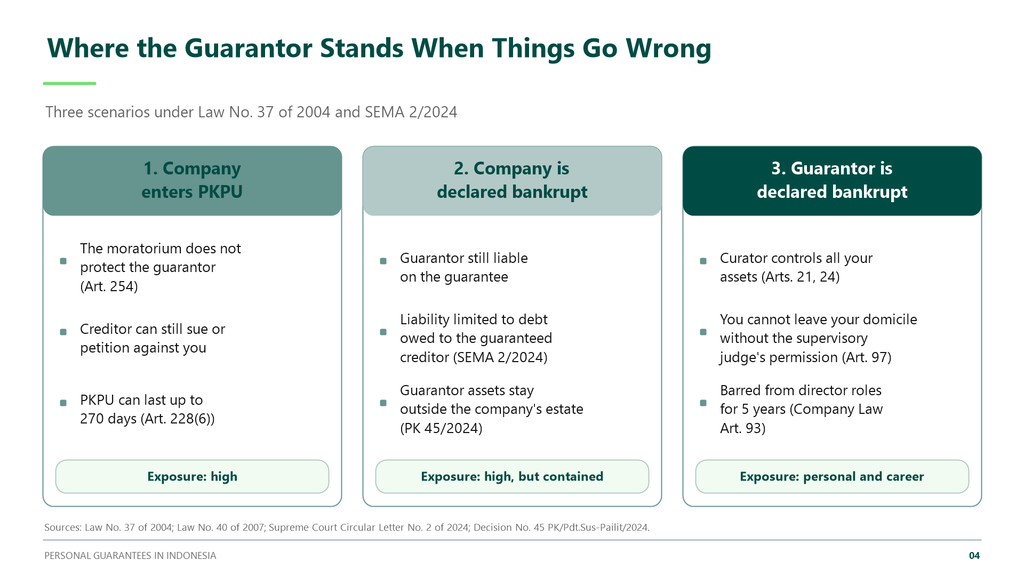
Figure 4. Where the guarantor stands in three common distress scenarios.
Directors and Shareholders as Personal Guarantors
Most personal guarantees in Indonesia come from the people who run or own the borrower. For them, the risk is not only financial.
Signing Personally, not for the Company
When a director signs a personal guarantee, he or she acts as an individual, not as an organ of the company. The guarantee binds the director’s own assets. It also survives the end of the directorship. Resigning does not release a director from a guarantee already given, unless the guarantee itself says so.
What Personal Bankruptcy means in Practice
Personal bankruptcy affects both control over assets and freedom of movement. Under the Bankruptcy Law:
- The bankruptcy covers all of the guarantor’s assets at the date of the decision, plus anything acquired during the bankruptcy (Article 21) subject to the exclusions in Article 22 and the applicable marital-property rules.
- The guarantor loses the right to manage and dispose of those assets from the day of the decision, and a curator takes control (Article 24(1)).
- The guarantor may not leave his or her place of residence without the permission of the supervisory judge (Article 97).
Bankruptcy can also prevent a person from being appointed as a director. Under Article 93(1) of the Company Law (Law No. 40 of 2007), a person declared bankrupt in the five years before appointment cannot become a director. For a foreign executive whose stay in Indonesia rests on a director role, that bar can end the assignment.
Once the bankruptcy ends, the former debtor can apply to the court for rehabilitation under Article 215 of the Bankruptcy Law. Rehabilitation restores the person’s standing. However, it requires proof that the creditors have been satisfied, and it does not return any assets already sold.
How this Differs from Director Liability for Company Bankruptcy
A personal guarantee is a promise the director chooses to make. Director liability under the Company Law is different. Under Article 104(2), if a company goes bankrupt because of the directors’ fault or negligence and the bankruptcy estate cannot cover its debts, each director is jointly liable for the unpaid balance. This also applies to former directors who were at fault within five years before the bankruptcy decision (Article 104(3)). A director escapes liability only by proving all four conditions in Article 104(4): the bankruptcy was not caused by his or her fault or negligence; he or she managed the company in good faith, with care and full responsibility; he or she had no direct or indirect conflict of interest; and he or she took steps to prevent the bankruptcy. Signing a personal guarantee does not, by itself, show fault under Article 104.
A director who signed a personal guarantee and also mismanaged the company may face two separate claims. The bank can invoke the guarantee. The director can also be held personally liable for the company’s unpaid debts under Article 104 of the Company Law. We discuss the separate criminal exposure of companies and their officers in our article on corporate criminal liability in Indonesia.
Personal Guarantee vs Corporate Guarantee in Indonesia
Lenders often want both: a guarantee from the parent company and one from the founder or president director. A personal guarantee in Indonesia and a corporate guarantee work under the same Civil Code rules. The risks, however, differ.
For a corporate guarantee, internal approvals matter. Under Article 102(1) of the Company Law, directors need GMS approval to transfer company assets, or to use them as security for debt, where the value exceeds 50% of net assets. The rule does not apply where the transaction is part of the company’s business under its articles of association (Article 102(3)). Whether a guarantee alone, with no security over identified assets, triggers Article 102 is debated. In practice, lenders ask for GMS approval anyway. Even where approval is missing, the transaction still binds the company if the counterparty acted in good faith (Article 102(4)). Lenders also check, as separate questions, any approvals the articles of association require, the signatory’s authority, and any conflict of interest.
For a foreign group, a guarantee from the offshore parent is often a better alternative to a director’s guarantee. It keeps the risk inside the group and away from the individuals running the Indonesian business. Where several shareholders give guarantees, the shareholders agreement should also say how they share the cost if a lender calls on one of them.
Table 3. Personal Guarantee vs Corporate Guarantee
| Feature | Personal Guarantee | Corporate Guarantee |
|---|---|---|
| Guarantor | An individual, such as a founder, director or shareholder | A company, such as a parent or affiliate |
| Legal basis | Civil Code, Arts. 1820 to 1850 | Civil Code, plus Company Law approvals |
| Approvals needed | Spousal consent, in practice | Spousal consent where joint property may be affected; whether it is legally required depends on the marital-property regime |
| Assets at risk | All personal assets, including joint marital property | The guarantor’s own assets, and joint marital property where the marital regime allows. The other spouse’s separate assets are not automatically at risk |
| Effect of bankruptcy | Personal bankruptcy and a five-year director bar | Company bankruptcy; possible director liability under Art. 104 |
| Death or exit | Passes to heirs (Art. 1826); survives resignation | Survives changes of shareholders or management |
| Typical use | Owner-managed companies and local bank loans | Group financing and parent support for an Indonesian subsidiary |
| Key risk | Personal wealth and career exposure | Missing approvals, authority gaps or conflicts of interest. A good-faith lender is protected if GMS approval is missing (Art. 102(4)). |
Cross-Border Enforcement for Foreign Guarantors and Foreign Lenders
Foreign Court Judgments are not Enforceable in Indonesia
Indonesia is not party to any treaty that lets foreign court judgments be enforced locally. Article 436 of the Reglement op de Rechtsvordering (Rv) states that judgments of foreign courts cannot be executed in Indonesia. Instead, the creditor must bring the claim again before an Indonesian court. The foreign judgment can serve as evidence, but the Indonesian court decides the case afresh.
This is a real problem for a foreign lender that holds a personal guarantee in Indonesia from a local individual. A judgment from a court in Singapore or London cannot, on its own, be used to seize the guarantor’s house in Jakarta.
Foreign Arbitral Awards are Enforceable
Indonesia ratified the New York Convention through Presidential Decree No. 34 of 1981. As a result, foreign arbitral awards can be enforced in Indonesia. Law No. 30 of 1999 on Arbitration sets out the process in Articles 65 to 69.
Under that law, the Central Jakarta District Court handles international awards. The award must come from a country bound with Indonesia by a treaty on award enforcement, such as the New York Convention. It must also concern commercial law and must not conflict with public order. Once the court grants an exequatur, the creditor can execute the award against assets in Indonesia.
Public order is the main risk, because Indonesian courts have read it broadly at times. Therefore, a well-drafted, bilingual guarantee matters. It narrows the room for such challenges.
When the Guarantor’s Assets are Outside Indonesia
The problem also runs the other way. Suppose an Indonesian bank holds a guarantee from a foreign director whose main assets are in Singapore, Japan or Europe. An Indonesian judgment may face the same hurdles abroad, depending on the rules where the assets sit.
For that reason, creditors should ask where the guarantor’s assets are before they choose the forum. If the assets sit mainly outside Indonesia, the creditor should pick a forum that the courts of that country will respect. Arbitration usually meets this test, because the New York Convention has wide coverage.
Choosing Governing Law and Forum
Indonesian law does not require a guarantee to follow Indonesian law. However, a guarantee of an Indonesian loan is often easier to enforce if it follows the same law as the loan. Our practical guidance is as follows.
- If the guarantor and the assets are in Indonesia, Indonesian law with Indonesian courts or BANI arbitration is usually the most direct route.
- If the guarantor or the assets are outside Indonesia, the better choice is arbitration with a seat in a New York Convention country, such as Singapore.
- An exclusive foreign court clause is risky unless the creditor is sure it will never need to enforce in Indonesia.
- Whatever law applies, the document should be bilingual to meet Law No. 24 of 2009.
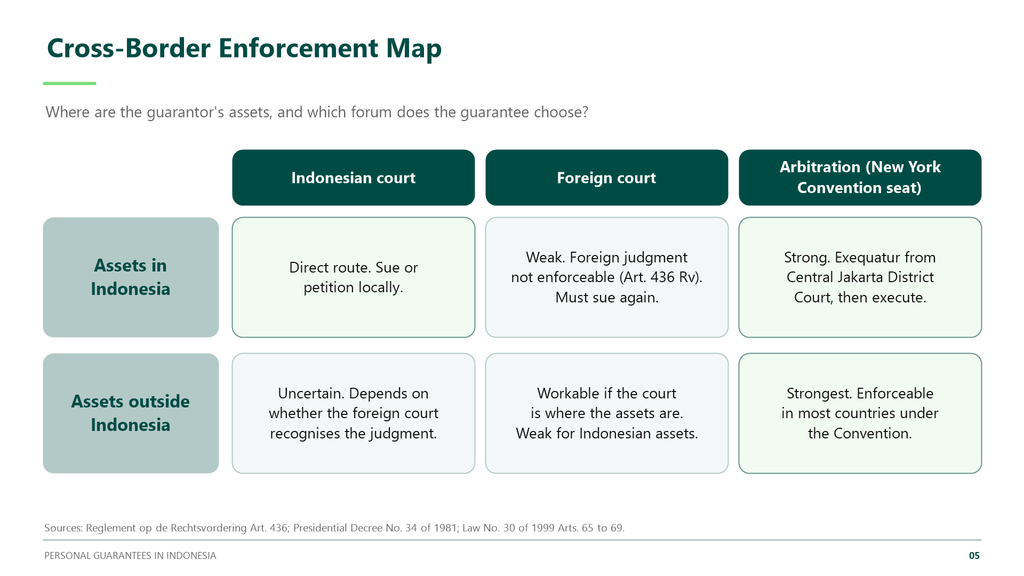
Figure 5. Cross-border enforcement of a personal guarantee in Indonesia, by asset location and forum.
Drafting Checklist for Both Sides
A guarantee is easier to negotiate before signing than to fight after a default.
Five Questions to Ask Before Signing
A director asked to sign a personal guarantee in Indonesia should slow the process down and ask five questions first.
- What exactly does it cover? The guarantee may cover one facility, or all present and future debts of the company.
- Is there a cap? An unlimited guarantee covers everything that flows from the main debt. This includes the costs of a claim against the debtor and costs incurred after the guarantor has been warned (Article 1825). It does not make every legal expense recoverable.
- Which rights does it waive? The bank should list each waived article and explain why it needs the waiver.
- When does it end? The document should include a release date or a release trigger, such as leaving the board.
- Who else is guaranteeing? Co-guarantors should agree in writing how they will share any payment.
Common Mistakes we See
Most disputes over a personal guarantee in Indonesia trace back to a few avoidable errors.
- Signing an English-only guarantee with an Indonesian party, which invites a challenge under Law No. 24 of 2009.
- Assuming that resignation ends the guarantee. It does not, unless the document says so.
- Leaving out spousal consent, which weakens enforcement against joint property.
- Choosing a foreign court for a guarantor whose assets are all in Indonesia.
- Forgetting the guarantee on an exit. A seller who keeps a personal guarantee after selling the business stays exposed to a company he or she no longer controls.
Negotiation Points for Both Sides
The table below sets out the points we raise most often. Neither side will get everything it asks for. Still, each point deserves a conversation at the term sheet stage.
Table 4. Drafting Checklist
| Issue | What the Guarantor should sk for | What the Lender should Insist on |
|---|---|---|
| Amount | A fixed cap that includes interest and costs | A cap that covers principal, interest, fees and enforcement costs |
| Term | A fixed end date, or release on a set event | A continuing guarantee until full repayment |
| Release triggers | Release on leaving the board or selling the shares | No automatic release without the lender’s consent |
| Statutory privileges | Keep Art. 1831 (pursue the debtor first) and Art. 1848 | Express waivers listed by article: 1831, 1833, 1837, 1843, 1847, 1848 and 1849 |
| Scope | Limit the guarantee to a named facility | Clear wording on covered obligations, including amendments and refinancing |
| Information | Copies of default notices and regular loan updates | A duty on the guarantor to disclose assets and report changes |
| Co-guarantors | Several (pro rata) liability | Joint and several liability |
| Language and form | Bilingual text with a clear prevailing-language clause | Bilingual notarial deed |
| Spousal consent | Rely on a marriage agreement where one exists | Signed spousal consent for joint property |
| Forum | A forum where defences get a fair hearing | Arbitration where assets are offshore; local courts where assets are in Indonesia |
| Extra support | Step-down of the cap as the loan is repaid | Offshore cash collateral or a parent guarantee where the guarantor’s wealth is abroad |
What Is Changing
Several bills on Indonesia’s legislative programme are relevant to guarantors and creditors. As of the April 2026 review, the 2026 priority list contained 68 bills.
- Civil Procedure Bill: It was in first-level deliberation as of April 2026, according to the Ministry of Law. It would replace the colonial-era procedural rules that govern District Court claims.
- Private International Law Bill: It was also in first-level deliberation. It matters most for cross-border cases, because it covers questions such as choice of law and the treatment of foreign decisions.
- Moveable Collateral Bill: It was awaiting a presidential letter as of the same date.
- Curator Profession Bill: The House of Representatives added it to the 2026 priority list in April 2026.
Calls to revise the Bankruptcy Law itself also continue. For now, Law No. 37 of 2004, read with SEMA 2/2024, remains the framework for any personal guarantee in Indonesia. We will update this article as these bills progress.
Partner Perspective
“A personal guarantee should be assessed as part of the financing structure, not as a stand-alone substitute for collateral. Under Indonesian law, borgtocht is accessory to the principal obligation. Waiving the benefit of excussion may allow the lender to proceed directly against the guarantor, but does not by itself turn the undertaking into an autonomous payment obligation. The key questions remain: what valid debt is guaranteed, when is it enforceable, and what is the agreed limit of exposure?
For a lender, the commercial value lies in recoverability rather than the breadth of the signature block. Identify executable assets, ownership and the applicable marital-property regime; consider properly constituted asset security where appropriate; and align the loan and guarantee’s governing law, dispute mechanisms and enforcement strategy. Bankruptcy is a collective statutory process, not a guaranteed shortcut to individual recovery, and an arbitration clause does not necessarily exclude a bankruptcy petition.
For a director or sponsor, negotiate the cap, covered facilities, future advances, information rights and release mechanics before signing. Resignation or a share sale should be accompanied by a documented lender release if an exit from guaranteed exposure is intended. On an amendment or refinancing, distinguish a mere extension from a novation and obtain any necessary guarantor participation or replacement guarantee. Neither party should assume that broad waiver language cures defects in the underlying obligation or automatically preserves the guarantee through every restructuring.“
Frequently Asked Questions
1. What is a personal guarantee in Indonesia?
A personal guarantee in Indonesia (borgtocht) is a contract under which an individual agrees to fulfil a debtor’s payment obligations if the debtor fails to pay. If the guarantee is invoked, the guarantor’s own assets are at risk. Articles 1820 to 1850 of the Indonesian Civil Code govern these guarantees. The Bankruptcy Law and Supreme Court guidance also apply when the debtor or the guarantor becomes insolvent.
2. Is a personal guarantee legally enforceable in Indonesia?
Yes. A personal guarantee in Indonesia is enforceable if it meets the conditions for a valid contract in Article 1320 of the Civil Code and the language rules in Law No. 24 of 2009. However, it does not create security over specific assets. To claim the guarantor’s assets, the creditor needs a court judgment, an enforceable arbitral award or a bankruptcy order..
3. Can a creditor pursue the guarantor before the company?
Yes, in most cases. Article 1831 of the Civil Code lets a guarantor require the creditor to pursue the debtor’s assets first. However, that protection falls away if the guarantor waives it or another exception in Article 1832 applies. For a personal guarantee in Indonesia, most bank forms include an express waiver.
4. Can a guarantor be declared bankrupt in Indonesia?
Yes. Where a personal guarantee is directly enforceable, a guarantor may face a bankruptcy petition in Indonesia. This is the case, for example, where the guarantor has waived the right in Article 1831 of the Civil Code to make the creditor pursue the debtor first. The creditor must also meet the requirements of the Bankruptcy Law: the guarantor must have at least two creditors and at least one debt that is due and unpaid.
5. Are directors personally liable for company loans in Indonesia?
Directors are not personally liable for company loans merely because they hold office. Signing a personal guarantee in Indonesia creates a separate contractual obligation to repay the guaranteed debt. Directors may also face liability under Article 104 of the Company Law where their fault or negligence causes the company’s bankruptcy and its assets are insufficient to meet its obligations, subject to the statutory defences.
6. Can a personal guarantee be enforced against a foreign guarantor?
Yes. However, enforcement is harder if the guarantor’s assets are located abroad. An Indonesian judgment must first be recognised by the courts in that country, or new proceedings may have to be brought there. Arbitration is therefore often more practical. Under the New York Convention on the Recognition and Enforcement of Foreign Arbitral Awards, an arbitral award can be enforced in most countries.
7. What rights does a guarantor have under Indonesian law?
The Civil Code gives a guarantor several rights. The guarantor can require the creditor to pursue the debtor first (Article 1831) and can ask that the debt be split among co-guarantors (Article 1837). After paying, the guarantor can recover from the debtor (Article 1839) and step into the creditor’s position (Article 1840). Standard bank forms for a personal guarantee in Indonesia often waive many of these rights.
8. How can a guarantor be released from a personal guarantee?
A personal guarantee in Indonesia generally ends when the main debt is paid or otherwise extinguished. Articles 1848 and 1849 also provide grounds for release in certain circumstances, including where the creditor prevents subrogation or voluntarily accepts an asset in payment. Otherwise, release depends on the guarantee’s terms or the creditor’s agreement. Resigning as a director does not, by itself, discharge the guarantee.
9. Does a personal guarantee need spousal consent in Indonesia?
No. Under Article 1826 of the Indonesian Civil Code, a guarantor’s obligations under a personal guarantee pass to his or her heirs. The creditor can therefore claim against the estate, subject to the applicable inheritance law. Guarantors should factor this into their estate planning.
10. What is the difference between a personal guarantee and a corporate guarantee in Indonesia?
About Nusantara DFDL Partnership
Nusantara DFDL Partnership (NDP) is an Indonesian law firm and a member of the DFDL network, which operates across Southeast Asia. NDP advises foreign corporations, institutional investors, and Indonesian businesses across a full suite of corporate legal services, including corporate advisory, mergers and acquisitions, foreign direct investment, joint ventures, employment law, real estate, dispute resolution, restructuring, and cross-border transactions. NDP works with clients across sectors including digital infrastructure, financial services, energy, manufacturing, and property.
Disclaimer
This article is for general informational purposes only and does not constitute legal advice. Regulatory requirements in this area are subject to change. Readers should seek legal advice before taking steps to restructure, merge, transfer, dissolve, or otherwise reorganise an Indonesian entity or group.